
A Beginner’s Guide to Ceiling Track Hoists: Slings, Charging & Safety
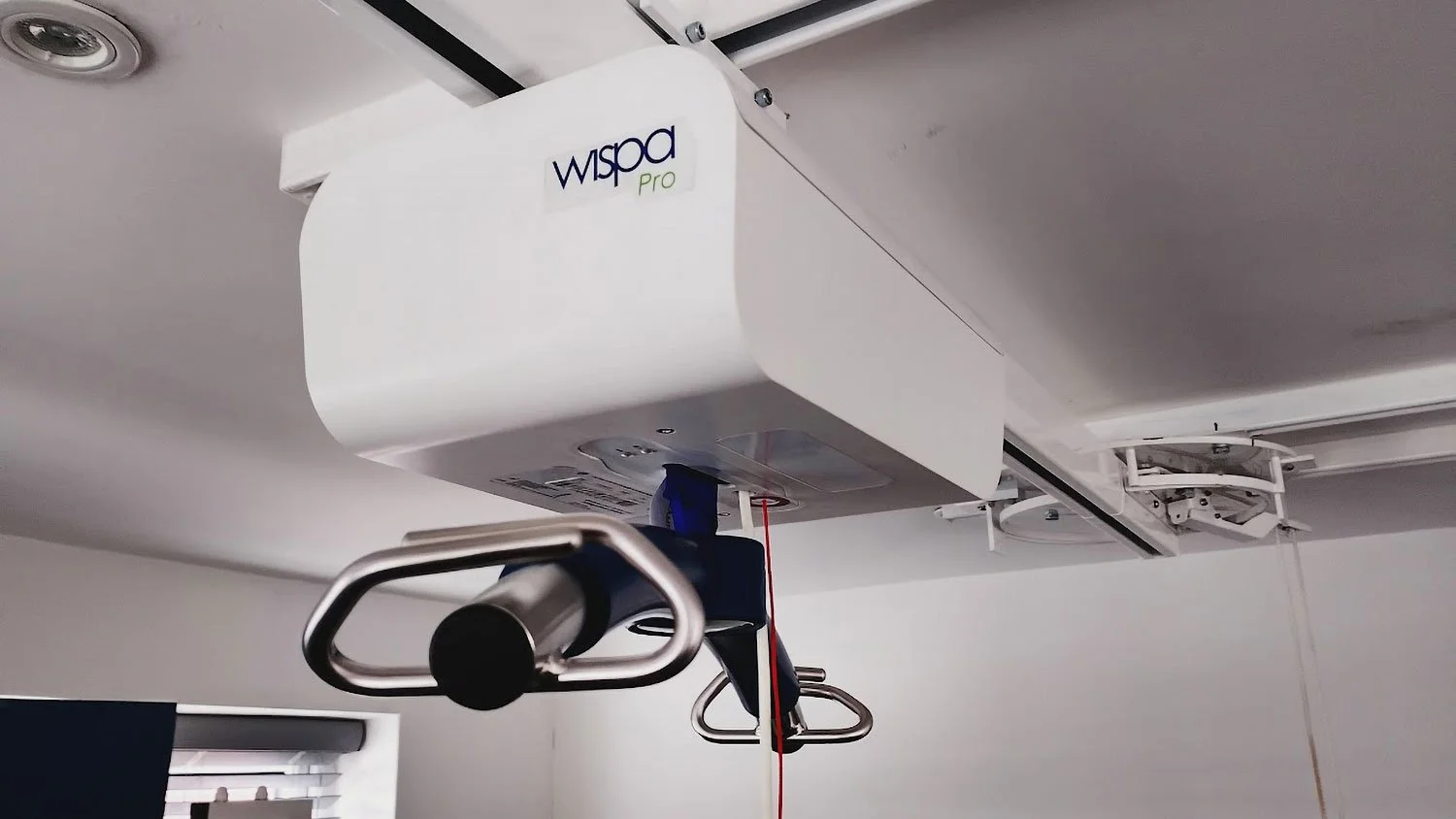
For families and carers navigating the world of specialist mobility equipment, a ceiling track hoist can be life-changing.
It removes the heavy lifting from daily care, making transfers safer for both the user and the carer.
However, moving from a manual transfer or a mobile hoist to a ceiling track system can feel daunting at first. At Stairlifts Scotland Ltd, we don't just install equipment; we support you in using it confidently. This guide covers the three most common questions our engineers are asked during handovers.
1. Charging: Why is my hoist beeping?
If your hoist starts beeping, don't panic. It is almost always a polite reminder from the battery system.
Ceiling track hoists run on rechargeable batteries located inside the motor unit. Unlike a mobile phone that you plug in when it’s dead, a hoist needs to be charged whenever it is not in use.
The Golden Rule: Always return the hoist to its designated "Docking Station" (usually at the end of the rail) immediately after a transfer.
The Beep: The beeping usually signals that the motor unit has been left away from the charging point. Moving it back to the dock will silence the alarm and ensure it is fully charged for the next lift.
Safety First: Most modern hoists will not operate if the battery is critically low. Keeping it charged isn't just about convenience; it's about reliability.
2. Slings: Which one do I need?
A hoist is only as good as the sling you use with it. There is no "one size fits all" solution, and using the wrong sling can be uncomfortable or unsafe.
We typically recommend considering three types of slings for a full care routine:
The General Transfer Sling: This is your "everyday" sling, designed for moving from a bed to a chair or wheelchair. It offers high back support and often comes with padded legs for comfort.
The Toileting Sling (Access Sling): This has a large opening at the bottom, allowing clothing to be removed easily for using the toilet without taking the sling off. Note: This usually requires the user to have some upper body stability.
The Mesh Bathing Sling: Made from a quick-drying netting material, this is essential for transfers into a bath or shower. Unlike padded slings, it won't hold water and become heavy.
Important: Never guess the size. A sling that is too large allows the user to slip, while one that is too tight can cause friction. Our team or your OT (Occupational Therapist) can help assess the perfect fit for you.
3. Can I use the hoist while it is plugged in?
No. For safety reasons, ceiling track hoists are designed not to work while they are actively charging.
This prevents the risk of anyone getting tangled in a charging cable during a lift or pulling the charging dock off the wall. This is why the "Return to Charge" habit mentioned above is so critical—you need the battery to be ready to go the moment you need it.
Need specific advice on specialist care?
Whether you need a spare sling, a battery service, or a quote for a new system, our specialist team is here to help.
Contact Us Today for advice tailored to your specific needs.